
Why is it needed?
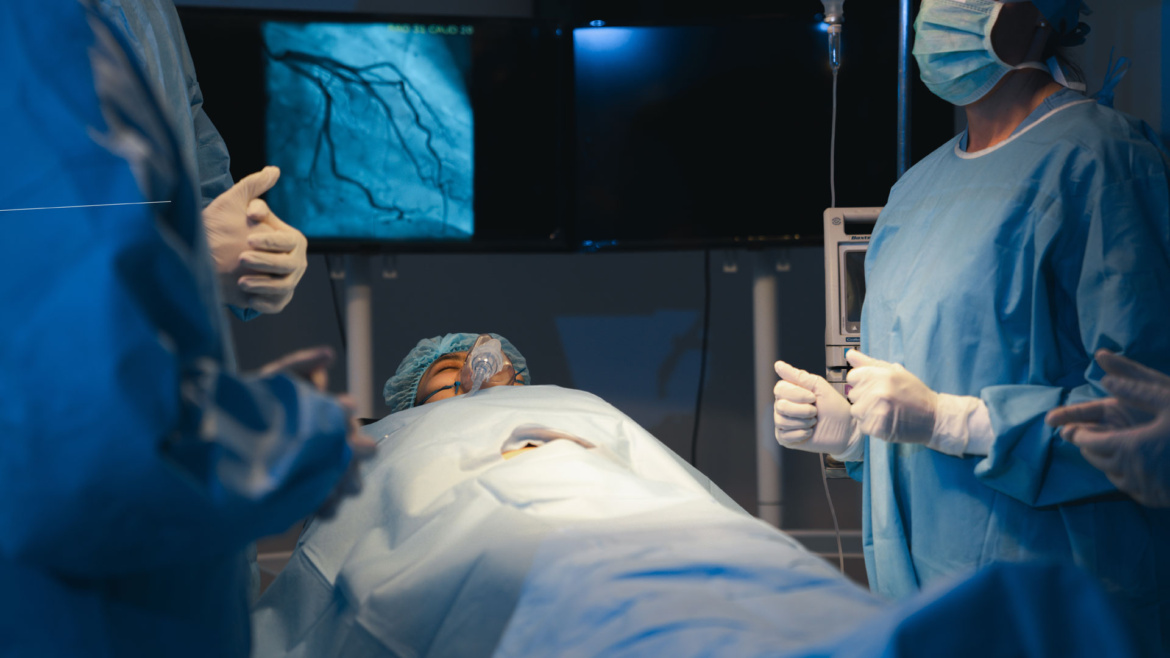
Based on your symptoms and test results, a coronary angiography may be necessary. Depending on the findings, we will determine the best therapy for you: lifestyle changes or medication may suffice. In other cases, a stent implantation or even bypass surgery may be required. The examination may also reveal that despite suspicious symptoms (like chest pain or shortness of breath), your heart is completely healthy, and the discomfort originates elsewhere.
The Procedure
Most patients undergo a left heart catheterization. Under local anesthesia, a thin, flexible plastic tube (catheter) is inserted into the coronary arteries via the radial artery (at the wrist) or, in some cases, the femoral artery (in the groin). You will generally feel no pain, only a slight pressure. Contrast dye is administered through the catheter to make the coronary arteries and any narrowings visible on X-ray. You might experience a brief, harmless sensation of warmth throughout your body for about 10 seconds.
Possible Complications
The procedure is generally very safe and complication-free. You might experience extra heartbeats (extrasystoles) when the catheter touches the heart wall. Arrhythmias requiring medical intervention occur in only about 1 in 500 cases. Mild allergic reactions to the contrast dye (nausea, rash) affect fewer than 5% of patients and subside quickly. Severe, life-threatening complications (like vessel injury, heart attack, or stroke) are extremely rare (less than 1 in 1000).
After the Procedure
Typically, patients can leave the clinic about 3 to 4 hours after the procedure with a pressure bandage on their arm. We are, of course, always available should any issues arise later.